One More Year: How Tokyo Turns a Layover Into a Life You Can't Quite Explain
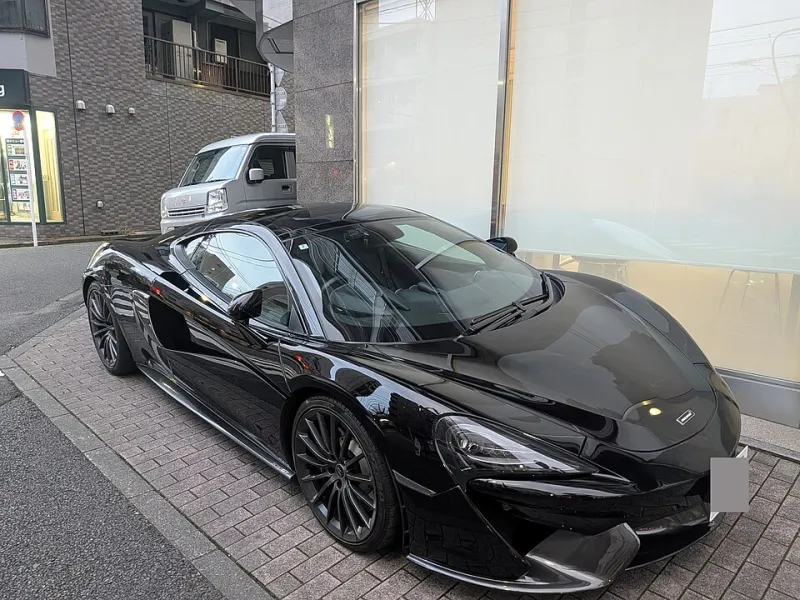
Photo: Syced, CC0, via Wikimedia Commons
I want to go home for Christmas.
I said that in year two. And year four. I said it again last year, and then I looked at my calendar and realized that the thing I still call home has not been where I actually live for the better part of a decade. Tokyo got me. And if you have spent any real time here as a Black expat, you probably know exactly what I mean.
This is not a story about a place being perfect. Tokyo is not perfect. It is a city that will exhaust you, confuse you, price you out of certain neighborhoods, and occasionally make you feel like the most visible invisible person on the planet. And yet.
And yet.
The First Year You Were Just Visiting
Everybody's Tokyo story starts the same way: temporarily.
A teaching contract. A corporate transfer. A relationship that seemed worth following across an ocean. A creative residency. A "let me just try this for a year and see what happens" that happened to coincide with a breakup, a layoff, or just a season of life where the US felt too small and too loud and too much like the same thing on repeat.
In year one, you are a tourist with a visa. You are collecting experiences. You are posting photos that make your followers ask if you are okay, and you are saying yes, more than okay, actually — you are great. You are not lying. The novelty of Tokyo in year one is genuinely intoxicating. The trains run on time. The convenience stores are stocked with things that feel like miracles at 2 a.m. The city is enormous and navigable and somehow both chaotic and ordered in a way that makes perfect sense once you stop trying to apply American logic to it.
You tell yourself you will leave when the contract ends. When the savings hit a certain number. When the relationship runs its course. You have an exit strategy. Everybody has an exit strategy.
Year Three Is When the Roots Go In
Somewhere between year two and year four, something shifts. It is not dramatic. It does not announce itself. But you notice it one day when you stop translating everything in your head and just live, when you navigate a government office in Japanese without panic, when you have a neighborhood konbini where the staff knows your order.
You have a life here. Not an expat life — an actual life.
For Black expats specifically, this moment carries a particular weight. Because building a life in Tokyo as a Black person requires more than just showing up. It requires finding your people — the other Black expats, the African diaspora community, the handful of Afro-Japanese folks who understand the particular texture of your experience here. It requires building trust in a city where trust is earned slowly. It requires making yourself legible in a culture that did not grow up with you in it.
When you have done all of that work, the idea of leaving starts to feel like abandonment. Not of Tokyo — of the version of yourself you built here.
"I came for a job and I stayed for who I became," says Kezia, a 36-year-old filmmaker originally from Baltimore who has been in Tokyo for seven years. "How do you explain that to your mom? How do you explain that the person she raised left and someone better came back, and that better person lives in Japan now?"
You mostly do not explain it. You just stay.
The Lifestyle That Becomes a Golden Handcuff
Let us talk about the practical stuff, because the emotional stuff does not exist in a vacuum.
For many Black expats — particularly those who came from expensive US cities — Tokyo offers a quality of life that is genuinely difficult to replicate back home. A salary that goes further. A city that is walkable, safe, and rich with culture. A pace of life that, once you find your footing, feels sustainable in a way that grinding in New York or LA or Chicago never quite did.
There is also the freedom that comes from operating outside the specific racial exhaustion of American life. Tokyo has its own racial dynamics — complex, sometimes painful, never simple — but they are different. And different, for some people, is enough of a relief to become its own reason to stay.
"I am not going to pretend that part of why I stayed is not about not wanting to go back to being Black in America every single day," says Deon, a 40-year-old sound engineer from Detroit who has lived in Tokyo for nine years. "That sounds terrible when I say it out loud, but it is honest. Here I deal with my stuff. There I deal with my stuff plus everybody else's idea of what my stuff should be."
This is the golden handcuff nobody puts in the expat brochure. It is not just money or lifestyle or career. It is the psychic relief of a different set of problems. And once you have lived inside that relief long enough, going back to the original weight feels like a choice you have to actively make — not just a default setting.
What You Lose While You Are Staying
Here is the part that does not show up in the Instagram posts.
Your niece is eight now. You missed her being born, her first steps, her first day of school, and the phase where she thought you were the coolest person alive because you live in Japan. You missed your grandmother's last good year. You made it back for the funeral but not for the year before it when she still knew who you were.
Your friendships at home have a quality now that is hard to describe — warm but slightly distant, like a song you love but can only hear through a wall. The group chat keeps moving without you. The references pile up that you have to ask about. You are still loved. You are just increasingly a character in a story that is being written without you in the room.
And then there is the reverse problem: your Tokyo life is increasingly hard to explain to the people you love. The relationships you have built here, the community, the career pivots, the version of yourself that only makes sense in this city — none of it translates cleanly into the language of your family's expectations.
"My dad still thinks I am on an extended vacation," says Kezia. "He is waiting for me to come back and get a real job. I have a real job. I have a real life. But it does not look like the life he imagined for me, so it does not fully count in his mind."
This is the grief of the long-stay expat. Not the dramatic grief of loss, but the slow grief of divergence — of watching your life and the life people expected you to have drift further and further apart until the gap is too wide to explain in a phone call.
The Year You Stopped Counting
At some point, most long-term Black expats in Tokyo stop measuring their stay in years. The question "how long have you been here?" starts to feel strange, like being asked how long you have been alive. You have been here long enough that here is just where you are.
That moment is different for everyone. For some it comes with a permanent residency application. For others it is a relationship that becomes a marriage. For others still it is just a quiet morning when you realize you did not think about leaving once yesterday, and you cannot remember the last time you did.
Tokyo does not ask you to stay. It does not make a case for itself. It just keeps being itself — overwhelming and beautiful and maddening and endlessly surprising — and eventually you realize that you have organized your entire life around being in it.
"One more year," Deon says, laughing. "I have said that every year for nine years. At some point one more year just becomes your life."
Yeah. That tracks.
Welcome to Tokyo. You might be here for a while.