Velvet Rope Reality: What Happens When Black Expats Walk Into Tokyo's Most Exclusive Rooms
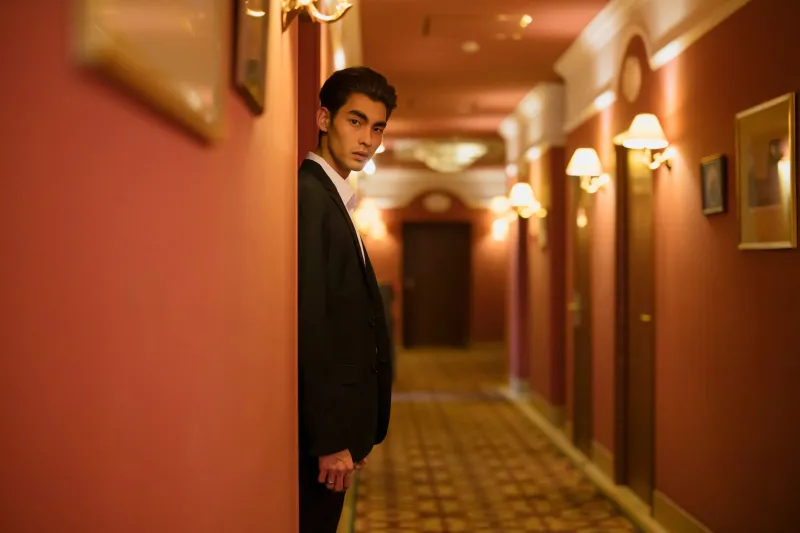
There's a particular kind of silence that falls when you walk into the wrong room and everybody knows it except you. In Tokyo, that silence has texture. It's the hostess who smiles a half-second too long before checking the reservation. The sommelier who lingers near your table more than anyone else's. The front desk agent at a Roppongi hotel who asks, politely, if you're a guest—even though you're holding a keycard.
That silence is the subject of a lot of late-night conversations in the Black expat community here. And it's complicated, because Tokyo's luxury spaces aren't always operating from the same racial script as the ones back home.
The Architecture of Exclusion (It's Not Always What You Think)
Let's be clear about something upfront: Tokyo's high-end establishments are exclusionary by design. That's the product. The curated guest list, the members-only dining room, the hotel bar where the bartender knows every regular by name—these are features, not bugs. The question Black expats keep running into is which layer of exclusion is being applied to them at any given moment.
"I've been turned away from places where I later found out my white colleagues had no problem getting in," says Marcus, a finance professional from Atlanta who's been based in Tokyo for four years. "But I've also been turned away from spots where I found out the same thing happened to a Japanese businessman who didn't have the right connection. So you're always doing this mental math—is this about race, or is this just how this city works?"
That math is exhausting in its own right. Tokyo's luxury culture runs on networks, introductions, and an almost ritualistic sense of belonging that takes years to build. For expats of any background, cracking that system takes time. For Black expats, there's an additional variable that doesn't show up in any guidebook.
Wealth Doesn't Translate the Same Way
In the US, there's a certain amount of money that gets you through doors that politeness alone can't open. Tokyo has a version of that, but it operates differently. Reputation, institutional affiliation, and who brought you into the room carry more weight here than a Black Amex in isolation.
"The card helps, but the card isn't enough," says Dominique, a creative director from Brooklyn who splits her time between Tokyo and New York. "What actually moves things is having someone vouch for you. Once you have that—once a Japanese colleague or a well-connected friend brings you into a space—the experience shifts completely. It's like a different city."
That's the entry point most successful Black expats have found: building genuine relationships that eventually produce the introductions that produce the access. It's a longer game than just showing up with credentials, but the payoff tends to be more durable.
The Michelin Situation
Fine dining is its own conversation. Tokyo has more Michelin-starred restaurants than any other city on the planet, and a significant portion of them operate on reservation systems that are, to put it diplomatically, difficult to navigate without a local intermediary. For Black expats, the concierge desk at a major international hotel is often the most reliable bridge—but that comes with its own set of trade-offs.
"You can get in anywhere if you're staying at a Park Hyatt or an Aman," notes Kevin, a tech entrepreneur from Houston. "The hotel handles it. But the moment you're trying to do it on your own, as an individual, you feel the friction. And you're never quite sure how much of that friction is the general difficulty of getting into these places versus something else."
Several people interviewed for this piece described a pattern: initial skepticism from staff, followed by a noticeable shift in treatment once it became clear they were fluent in the unspoken codes of fine dining—wine knowledge, tasting menu etiquette, the right cadence of interaction. It reads less like racism being overcome and more like a test being passed. Which raises its own uncomfortable questions about what the test is actually measuring.
Club Culture and the Nightlife Ceiling
If fine dining is complicated, Tokyo's high-end nightlife scene is a whole different level of layered. The city's top clubs—the ones where the bottle service runs six figures in yen and the clientele skews toward Japanese business elite and well-connected internationals—operate on a door policy that can feel genuinely impenetrable.
"There are places in Minami-Aoyama where I've stood outside and watched the logic of who gets in and who doesn't, and I genuinely cannot figure it out," says Aisha, a musician from Chicago who's been in Tokyo for three years. "It's not purely racial. There are Black Japanese people who move through those spaces easily. It's more about legibility—whether you fit the story the space is trying to tell about itself."
That framing—legibility—kept coming up in conversations. Tokyo's luxury spaces are, in a sense, producing an aesthetic. The question Black expats navigate is how to be recognizable within that aesthetic without erasing themselves to do it.
The Strategies That Actually Work
Every person interviewed for this piece had developed their own approach, and there were patterns across all of them.
Build before you need it. The relationships that open doors in Tokyo are built slowly, over dinners and introductions and shared experiences that have nothing to do with the specific room you eventually want access to. Trying to fast-track that process almost always backfires.
Dress the part, but make it yours. Tokyo's luxury spaces have a visual language. Learning it doesn't mean abandoning your own. Several people described finding a way to show up in a way that was unmistakably themselves while still signaling fluency in the environment.
Know when to walk away. "I've left places where the energy was wrong," says Marcus. "Not every room is worth the effort. Part of the game is knowing which doors are worth knocking on and which ones you build yourself."
That last point might be the most important one. A growing number of Black expats in Tokyo have stopped trying to access spaces that weren't built for them and started building their own—private dinners, members-only events, networks that exist outside the traditional luxury infrastructure. The velvet rope works both ways. And sometimes the most powerful move is deciding you don't need what's behind it.