Paint the Wall: Black Artists in Tokyo Are Done Asking Permission
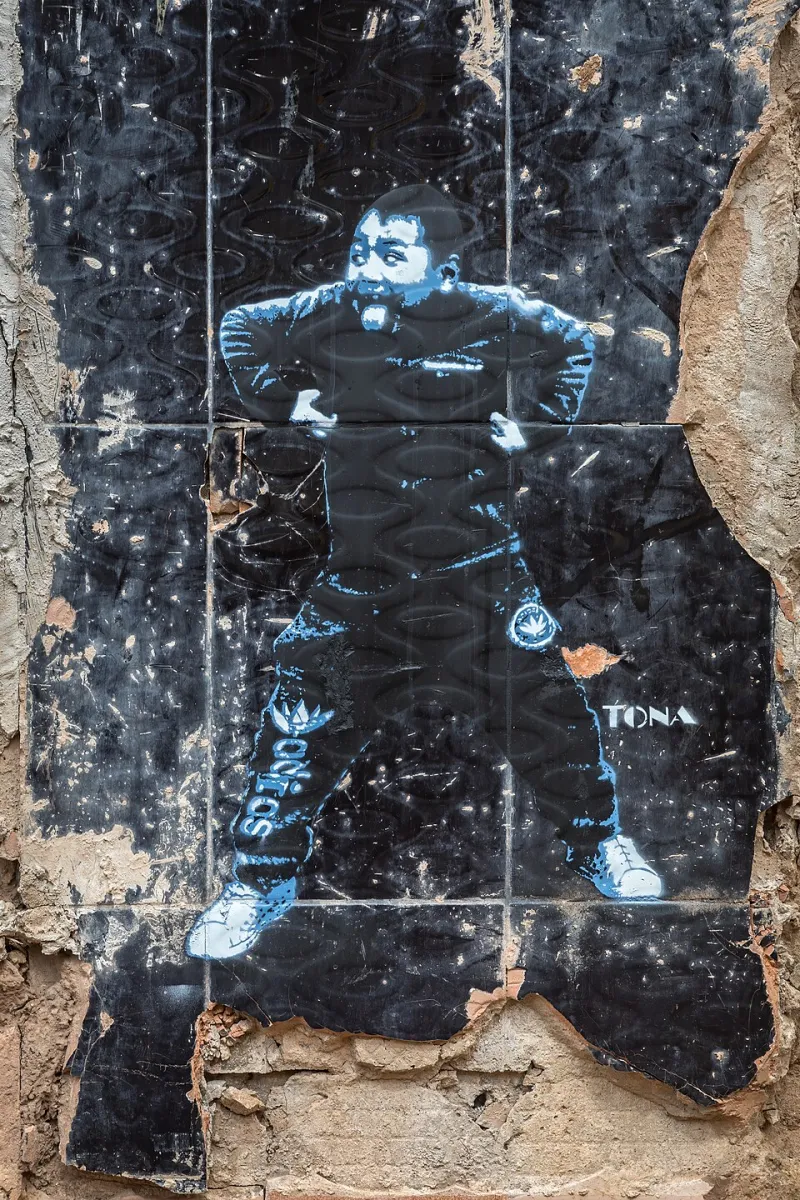
Photo: Tona, CC BY-SA 4.0, via Wikimedia Commons
If you follow Tokyo's art scene closely enough — the gallery openings in Minami-Aoyama, the alternative spaces tucked into Shimokitazawa basements, the pop-up shows that live and die on Instagram Stories — you've probably already noticed them. A photographer whose portraits of Black expats in Tokyo have been quietly circulating through the city's creative networks. A painter whose canvases hang in a gallery that usually shows Japanese minimalism, and whose work makes that context feel suddenly strange, suddenly necessary. A muralist whose commissions keep getting bigger.
Tokyo's Black visual artists are not a monolith. They come from different countries, work in different mediums, and have different relationships to the city. But they share something: the experience of making work about identity, belonging, and Blackness in a place that doesn't always have the vocabulary for it — and doing it anyway.
Making Work in a City That Doesn't Always See You
Japan's relationship with Blackness is complicated. It's a country that has absorbed elements of Black American culture — hip-hop, R&B, streetwear, basketball — with genuine enthusiasm, while simultaneously holding onto representations of Black people that would make most Americans' heads spin. Blackface imagery, still occasionally appearing in commercial media. A beauty industry that has historically equated dark skin with the undesirable. A general public that is curious, sometimes warmly so, but often operating from a narrow frame of reference.
For Black artists living and working in Tokyo, this is not abstract. It's the context in which their work exists. And for many of them, it's become the subject of the work itself.
"I didn't come here to make art about being Black in Japan," says Marcus, a photographer from Atlanta who moved to Tokyo six years ago. "But Tokyo kind of insisted on it. The way people see me here, the questions they ask, the assumptions — it got into everything I was shooting."
His current series documents Black residents across the city in the environments where they actually live and work: cramped apartments in Adachi, standing at konbini counters in Ikebukuro, riding the Yamanote Line at 7 a.m. The images are deliberately mundane. That's the point. "I wanted to show ordinariness," he says. "Because ordinariness is what gets denied."
Navigating Institutions (and Working Around Them)
Tokyo's formal art world — its major galleries, its biennials, its institutional collecting infrastructure — is not exactly known for its diversity. Japanese contemporary art dominates, as it should in Japan, but the gatekeeping can be real for foreign artists of any background, and the specific challenges facing Black artists add another layer.
Some have found traction through unconventional routes. A Trinidadian painter named Sasha has shown work in three Minami-Aoyama galleries over the past two years, building relationships not through formal submissions but through the city's dense network of creative parties, openings, and collaborative events. "In Tokyo, a lot happens through introductions," she says. "You have to be in the room first. Once you're in the room, people see the work."
Her paintings — large-scale, figurative, saturated with color — depict Black women in settings that blend Caribbean visual culture with Japanese aesthetic references. Hibiscus and torii gates. Carnival fabric patterns rendered in the flat, graphic style of ukiyo-e woodblock prints. They are beautiful and disorienting in a way that feels intentional, because it is. "I want the viewer to have to work a little," she says. "I want them to feel what it's like to be in a space where you're both familiar and foreign."
Others have bypassed traditional gallery structures entirely. Tokyo's alternative art scene — warehouse shows, rooftop exhibitions, installations in abandoned retail spaces — has been more receptive, and more interesting, for several Black artists who feel the formal gallery world asks them to sand down their edges.
Cross-Cultural Collaboration and Its Limits
One of the more generative dynamics in Tokyo's Black art community involves collaboration with Japanese artists and institutions who are genuinely curious about cross-cultural dialogue. Several Black artists have found real creative partnerships here — joint exhibitions, zine collaborations, residency programs at smaller art organizations that are actively trying to internationalize their programming.
But collaboration has its limits, and Black artists in Tokyo are clear-eyed about the difference between genuine exchange and being used as a diversity accessory. "There's a version of collaboration where your Blackness is the point," says Marcus. "Where you're brought in to make someone else's project look global. You learn to feel the difference pretty fast."
The artists who are doing the most interesting work seem to have figured out how to be selective — taking the collaborations that feel like real creative risk and declining the ones that feel like optics. It requires a certain confidence, especially in a city where saying no to an institution can feel professionally costly.
What the Work Is Actually Saying
Strip away the context — the visa status, the sourcing of art supplies, the navigation of gallery politics — and what you're left with is the work itself. And the work is saying something.
It's saying that Black people live full, complex, ordinary lives in Tokyo. It's saying that identity is not something you leave at the airport. It's saying that the experience of being a visible outsider in one of the world's most homogenous major cities produces a specific kind of clarity about who you are and what you're making.
Sasha puts it plainly: "I've learned more about what my Trinidadian-ness actually means by living in Japan than I did living in the Caribbean. Distance does that. It makes the thing visible."
That visibility — turned inward, turned outward, turned into painting and photography and installation and performance — is what makes Tokyo's Black art community worth paying attention to. These artists aren't waiting for a biennial to legitimize them. They're not holding out for a museum retrospective. They're making work right now, in a city that is slowly, sometimes reluctantly, making room.
The Scene Is Building
It would be overstating it to call this a movement. It's more like a constellation — individual artists, working in their own directions, occasionally overlapping, collectively making the city's creative landscape more honest about who actually lives here.
But constellations are how you navigate. And for Black creatives arriving in Tokyo looking for proof that this city has space for them, that constellation matters.
The work is on the walls. Go find it.