Not All Gaijin Are Created Equal: The Expat Hierarchy Black Tokyoites Know Too Well
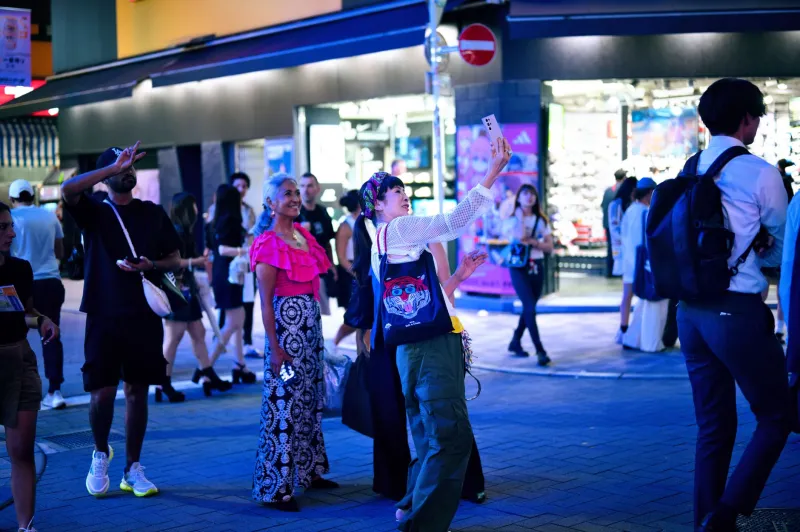
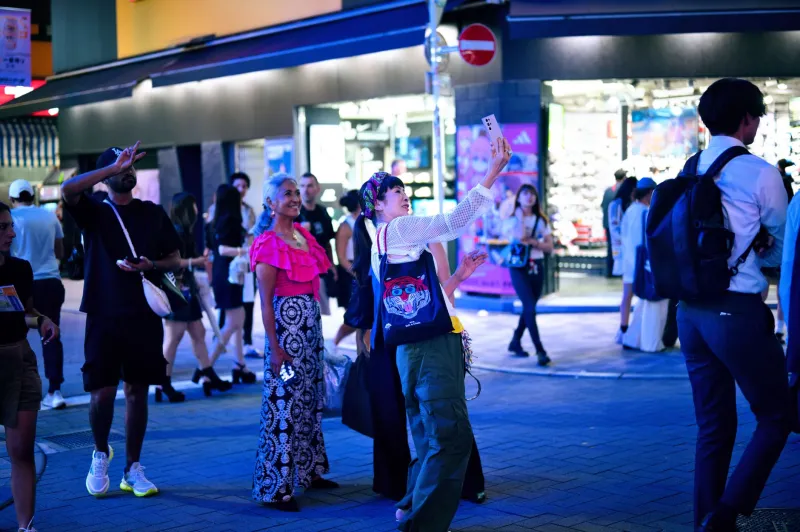
There's a version of Tokyo expat life that gets sold in travel blogs and relocation guides — one where being a Westerner automatically unlocks doors, scores you cool points at izakayas, and grants you a kind of charming outsider status that locals find endearing. If you're Black, you already know that story has some serious fine print. The gaijin card is real. It's just not the same card for everybody.
Let's talk about something the expat community doesn't exactly advertise at its welcome brunches.
The Card Everybody Claims, The Card Nobody Examines
The term gaijin — foreigner — gets thrown around like it's a monolith. And in some ways, the shared outsider experience does create a kind of solidarity. You bond over navigating the ward office in broken Japanese, over accidentally bowing to vending machines, over the collective exhaustion of being stared at on the Yamanote line.
But spend enough time in Tokyo's expat circles — the networking happy hours in Roppongi, the brunches in Daikanyama, the international school pickup lines — and a different picture starts to form. There's an unspoken ranking happening. White Western expats, particularly those from English-speaking countries, tend to sit at the top of that hierarchy. They're the ones most likely to land the English-teaching gigs with the best pay, the ones whose accents get called "proper," the ones who get waved into clubs without the side-eye. Their gaijin card? Full benefits, no restrictions.
Black expats are playing a different game entirely.
The Exotic-Threatening-Invisible Trifecta
Here's the thing about being Black in Tokyo: depending on the room, the context, and sometimes just the lighting, you can cycle through three completely different social identities in a single evening.
In one setting, you're exotic. You're the cool American, the one with the swag that Japanese youth have been absorbing through hip-hop and NBA highlight reels for decades. People want to talk to you, touch your hair, ask where you're from with genuine excitement. It's flattering for about five minutes before it starts to feel like being a living exhibit.
Shift the context — say, you're trying to get into a members-only bar in Nishi-Azabu, or you're navigating a corporate mixer where the senior partners are mostly European — and suddenly you're a question mark. The subtle double-takes. The assumptions about what you must do for work. The way someone across the room clocks you before deciding whether to approach. You know the look. You've been reading it your whole life.
And then there are entire spaces where you simply become invisible. Not threatening, not exotic — just... unaccounted for. The expat infrastructure wasn't built with you in mind, and sometimes it shows. The networking events that feel like they're really for a specific kind of expat. The dating apps where your matches drop off a cliff compared to your non-Black friends. The professional circles where being "international" somehow still defaults to a certain look.
Navigating all three of these simultaneously? That's a specific kind of mental load that nobody puts in the relocation package.
Code-Switching Has Passport Stamps Now
Black Americans didn't invent code-switching in Tokyo. We brought it with us, already well-practiced. What changes is the complexity of the performance.
Back home, most of us learned early how to adjust the dial — how to present in a job interview versus with your people on the block, how to modulate your energy depending on who's in the room. In Tokyo, that dial has more settings. Now you're code-switching across cultures, languages, and expat sub-communities all at once.
With Japanese colleagues, you might play up the warm, approachable American — a little louder, a little more expressive, because it reads as charming rather than aggressive in that context. With other expats, particularly in predominantly white spaces, you're recalibrating again — deciding how much of yourself to bring into the room, how much to let the microaggressions slide, whether it's worth spending the energy to educate someone who just asked if you miss "your home country" when you're from Atlanta.
With other Black expats? The dial comes off entirely. That's where the real conversation happens — over jerk chicken someone smuggled seasoning for, or at one of the underground parties where the DJ actually plays something your body recognizes. Those spaces are sacred precisely because you don't have to perform anything.
The Dating Market Doesn't Lie
If you want an unfiltered read on where you sit in a social hierarchy, look at the dating market. It doesn't have the courtesy to be subtle.
Black men in Tokyo report a split experience: on one hand, there's genuine interest rooted in hip-hop's cultural reach — you can walk into certain spaces and feel like a celebrity. On the other hand, that interest often comes loaded with projection, fetishization, and assumptions about who you are before you've said a word. The line between being seen and being stereotyped is thin and exhausting to walk.
Black women navigate something even more particular. The global desirability gap that follows Black women from the US doesn't magically disappear when you land at Narita. Within expat dating circles, the hierarchies are visible and documented in real-time by anyone paying attention. Meanwhile, the fetishization that Black men sometimes experience doesn't extend the same way — Black women in Tokyo are more likely to report being overlooked entirely in mixed expat spaces, even as they're building some of the most interesting lives in the city.
None of this is Tokyo's fault specifically. It's the world's stuff, just relocated.
So What Do You Do With All of This?
You play the game strategically, and you build the table you actually want to sit at.
The Black expats who've figured out Tokyo aren't the ones who pretended the hierarchy didn't exist. They're the ones who stopped auditioning for spaces that were never going to fully receive them, and started investing in the communities they actually wanted to grow. The underground events. The group chats. The dinner parties where everybody brings a dish from somewhere different and nobody has to explain themselves.
They're also the ones who got smart about leveraging the parts of gaijin privilege that do apply — the way foreignness can open certain professional doors, the way cultural curiosity creates genuine connection when it's mutual, the way Tokyo's appetite for Black American culture can be turned into real opportunity if you own your narrative instead of letting someone else tell it.
The gaijin card exists. It's just that yours has different terms and conditions. Reading that fine print isn't pessimism — it's preparation. And once you know the actual rules of the game, you can start playing it on your own terms.
Tokyo's a city that rewards people who move with intention. Bring yours.