What Tokyo Costs You That No Bank Account Can Measure
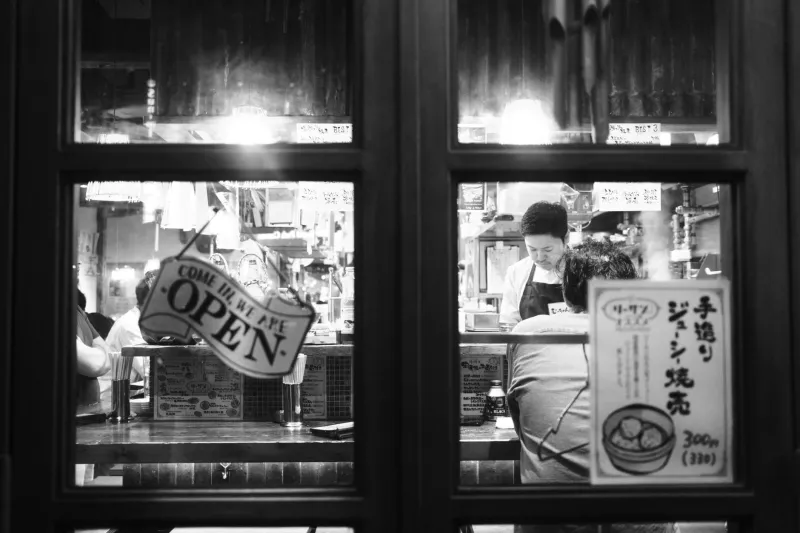
Anybody who's ever relocated to Tokyo can tell you about the financial math. You learn fast — the yen-to-dollar conversion becomes second nature, you figure out which neighborhoods are actually livable on your salary, and you accept that a decent moisturizer might run you forty bucks at the import shop in Minami-Aoyama. That part's survivable. You budget, you adjust, you move on.
But ask a Black expat who's been here five, eight, ten years about the real cost of building a life in Tokyo, and the conversation shifts into different territory entirely. The kind of territory that doesn't show up on a spreadsheet.
The Invisible Invoice
Darryl, a 38-year-old sound engineer from Atlanta who's been based in Tokyo for nearly a decade, puts it plainly: "I came here thinking the hard part was going to be the language. And yeah, Japanese is no joke. But the thing that actually drains me? It's the performance. Every single day, you're performing a version of yourself that's palatable enough for the room you're in."
That performance — what most of us know as code-switching — doesn't disappear when you cross the Pacific. If anything, it multiplies. Because now you're not just navigating race in a familiar American context with familiar rules. You're doing it in a country where the racial dynamics are entirely different, where your Blackness is often the first and only thing people register about you, and where the cultural framework for processing that is almost nonexistent.
"Japan doesn't have the same vocabulary for this stuff," says Monique, a 34-year-old educator originally from Houston who moved to Tokyo seven years ago. "Back home, even when things were hard, people got it. Here, I'm constantly explaining myself at a level that goes way beyond language. I'm explaining my existence."
That exhaustion is real, and it compounds. Researchers who study the psychological toll of minority stress — the chronic stress that comes from navigating environments where you're consistently othered — have documented how it accumulates over time. For Black expats in Tokyo, that stress doesn't come with the same support infrastructure that might soften the blow back in the States. No historically Black colleges down the road. No cookout down the street. No cousin who just gets it without you having to spell it out.
What You Give Up to Stay
The relationship math is another column in that invisible ledger. Several long-term residents we spoke to described a slow, painful drift from people back home — not because of any falling out, but because the distance does something quiet and persistent to even the closest bonds.
"My best friend from college and I used to talk every week," says Jerome, a 41-year-old entrepreneur from Chicago who has lived in Tokyo for eleven years. "Now it's like once a month if we're lucky. The time difference is brutal, but it's more than that. Our lives have just gone in such different directions that sometimes I don't even know how to explain what I'm dealing with. And she can't really explain hers to me either. We love each other, but we've become strangers in a lot of ways."
That particular grief — what some expats call "the slow goodbye" — rarely gets acknowledged in the glossy expat content that fills social media feeds. The aesthetics of Tokyo life are easy to sell: the cherry blossoms, the immaculate streets, the late-night ramen runs, the sense of safety that still catches Black Americans off guard after years of living with a different reality back home. What's harder to post about is the loneliness that can settle in after the novelty wears off.
Monique describes missing her mother's church in Houston — not necessarily the religion, but the community of it. "There's a specific kind of Black joy that I haven't been able to fully replicate here," she says. "I've built something beautiful in Tokyo, genuinely. But there are moments — usually around the holidays, or when something big happens back home — where I feel the absence of that very deeply."
The Gain Side of the Ledger
None of this is to say the balance sheet is all deficit. Far from it. Every person we spoke to was emphatic about that. Tokyo has given them things they couldn't have found anywhere else — a kind of freedom, paradoxically, that comes from being outside the specific racial trauma loop of American life.
"I don't carry the same fear here," Jerome says. "That's not nothing. That's actually enormous. When I walk down the street in Tokyo, I'm not running the same calculations I was running in Chicago. That alone has changed me."
Darryl talks about the creative expansion that came from being immersed in a culture that approaches aesthetics, craft, and discipline so differently from what he grew up with. "My work got better here. My ear got better. I got exposed to sounds and techniques and ways of thinking about music that I never would have encountered if I'd stayed home. Tokyo made me a different artist."
And there's the community that gets built — slowly, deliberately, out of necessity — among Black expats who find each other in this city. It's not the same as home, but it's something. A WhatsApp group that becomes a lifeline. A monthly dinner that turns into the thing you look forward to most. A stranger at a bar who becomes family because you both laughed at the same thing nobody else in the room understood.
Counting the Cost, Choosing Anyway
What's striking about these conversations is not the weight of what's been paid, but the clarity with which people hold it. These aren't people who stumbled into Tokyo and got stuck. They made choices — and keep making them, eyes open, with full awareness of what's on both sides of the equation.
"I know what I've given up," Monique says. "I've thought about it a lot. And I've also thought about what I would have given up if I'd stayed — certain versions of myself that I needed to leave behind to grow. Tokyo asked something of me. But so would anywhere else. At least here, what it asked made me bigger."
That might be the most honest accounting any of us can offer: not that the cost is small, but that the thing being built is worth it. And that understanding what you're paying — really naming it, sitting with it, refusing to pretend it doesn't exist — is the only way to make sure you're spending on your own terms.
The Tokyo tax is real. So is everything it bought you.