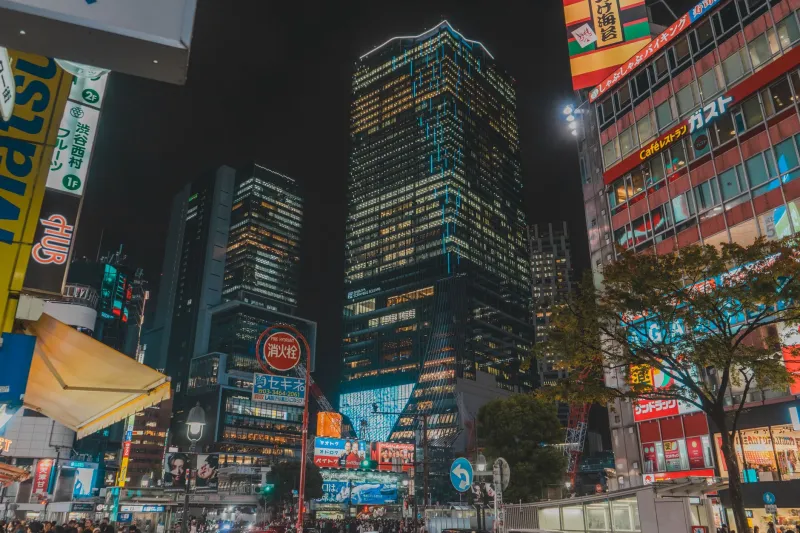
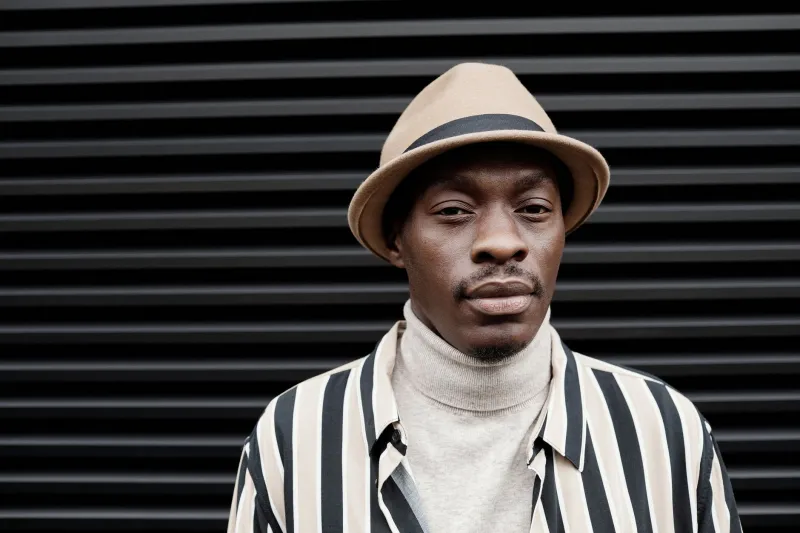
Exotic by Default: The Double-Edged Power of Being Black and Foreign in Tokyo
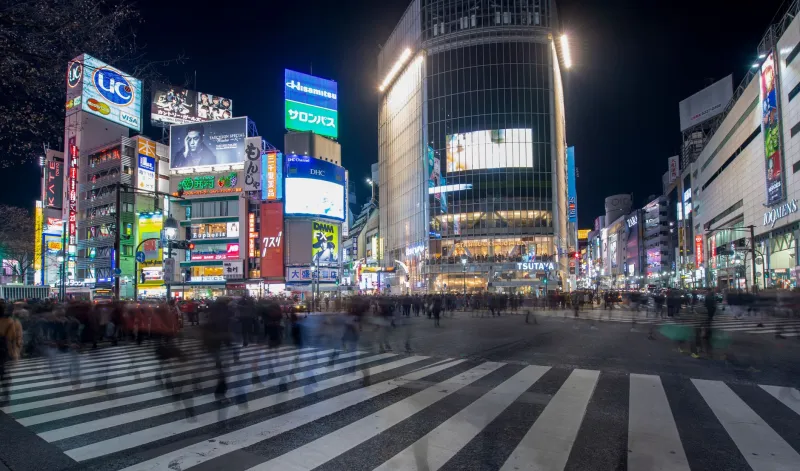
There's a moment almost every Black expat in Tokyo can describe without much prompting. You walk into a room — a casting call, a club, a corporate mixer — and you can feel the air shift. Heads turn. Not hostile, not always warm either. Just... aware. You have been registered. Filed under something nobody has a clean category for. You're Black. You're foreign. You're gaijin. And in Tokyo, that combination is its own kind of currency.
The question is whether you're the one spending it, or whether it's spending you.
The Double Outsider Effect
Being a foreigner in Japan already puts you outside the dominant social framework. The word gaijin — literally "outside person" — carries decades of cultural weight, and it lands differently depending on where you're from, what you look like, and what you're trying to do. White expats from Western countries often move through Tokyo with a certain frictionless ease, collecting what sociologists might call "prestige foreigner" status. Black expats, particularly Black Americans, exist in a different register entirely.
"Japan doesn't have the same anti-Black history that America does, but it has its own ideas about Blackness," says Marcus, a 34-year-old musician from Atlanta who's been based in Tokyo for six years. "A lot of those ideas come from hip-hop, from NBA culture, from movies. So you walk in carrying all of that without choosing to. The question becomes — do you work with it or fight it?"
For Marcus, the answer was to work with it. He's built a career producing music for Japanese artists and brands who specifically want that transatlantic Black American sound — the credibility that, in their minds, only comes from the source. "I'm not going to pretend I didn't benefit from the way they see me," he says. "But I also made sure the work was real. The perception opened the door. What I did inside the room kept it open."
When Otherness Becomes an Asset
In Tokyo's entertainment and fashion industries, Blackness — particularly Black American Blackness — reads as cultural authority. The city's deep love affair with hip-hop, R&B, and streetwear culture has created genuine demand for people who can authenticate that world. Black expats have leveraged this in ways that would genuinely surprise people back home.
DJs booking residencies at clubs in Shibuya and Roppongi. Stylists consulting for Japanese brands trying to crack the streetwear market. Dancers and choreographers hired because they move with a fluency that can't be faked or taught from YouTube. Models booked specifically because their look breaks from the aesthetic monotony that still dominates Japanese advertising.
Jasmine, a 29-year-old creative director from Chicago who came to Tokyo on a fashion internship and never quite left, has turned her outsider positioning into a full-time consultancy. "Japanese brands want to connect with Black American culture authentically, and they don't always know how to do that on their own," she explains. "I became the bridge. Not because I was the most qualified person in any traditional sense, but because I was present and I understood both sides."
She's careful to add a caveat: "That only works if you actually know what you're doing. The novelty gets you in the door maybe once. After that, you either deliver or you become a cautionary tale they reference in meetings."
The Performance Tax
Not everyone finds the math on this equation favorable. For every Black expat who's turned their double-outsider status into a career accelerant, there's someone who's found it quietly suffocating.
Derek, a 38-year-old English teacher from Houston who's lived in Tokyo for nearly a decade, describes a different experience. "People always want me to be the representative. Of Black culture, of America, of hip-hop, of whatever they saw in a music video last week. And after a while, that gets heavy. You're never just a person. You're always a symbol of something."
The performance he's describing is familiar to many Black Americans — the exhausting work of managing other people's projections while trying to just exist. In Tokyo, that dynamic doesn't disappear. It morphs. The projections are different, sometimes more benign in intent, but the underlying demand — be what I expect you to be — is structurally similar.
"There's a version of this where you get really good at performing the version of yourself that gets results," Derek says. "And then one day you look up and you're not sure which version is actually you anymore."
The Trap Underneath the Opportunity
The deeper issue isn't whether Black expats can leverage their outsider status in Tokyo — clearly, many can and do. The real question is what it costs over time, and whether the opportunities that flow from novelty are the same ones that build lasting careers and genuine community.
Industries that hire you because you're exotic tend to drop you when the exotic wears off, or when the next exotic thing arrives. The Black expats who've built something durable in Tokyo — in music, in fashion, in business — are almost universally people who found ways to ground their value in actual craft and relationships, not just in the cultural cachet of being who they are.
"You can ride the gaijin card for a minute," Jasmine says. "But you can't build a life on it. The people who last here are the ones who figured out what they actually have to offer beyond the novelty."
Marcus puts it more bluntly: "Tokyo will love you for what you represent right up until it doesn't. So you better have something real underneath that."
Choosing How You Get Seen
There's no clean resolution to the paradox. Being Black and foreign in Tokyo will always mean something to the people around you — meaning you didn't choose and can't fully control. The outsider card is in your hand whether you want it there or not.
What the most grounded Black expats in Tokyo seem to have figured out is this: you can acknowledge the card without letting it define your whole hand. You can use the doors that novelty opens without mistaking the doorway for the destination. And you can build relationships and a reputation that outlast whatever projection someone put on you the first time you walked into the room.
That's not a uniquely Tokyo lesson. But Tokyo has a way of teaching it faster than most places — because the gap between the version of you that gets attention and the version of you that actually matters shows up pretty quickly when you're living this far from home.