Two Cards, One Hand: What Black Expats in Tokyo Know About Playing a Game With No Rules
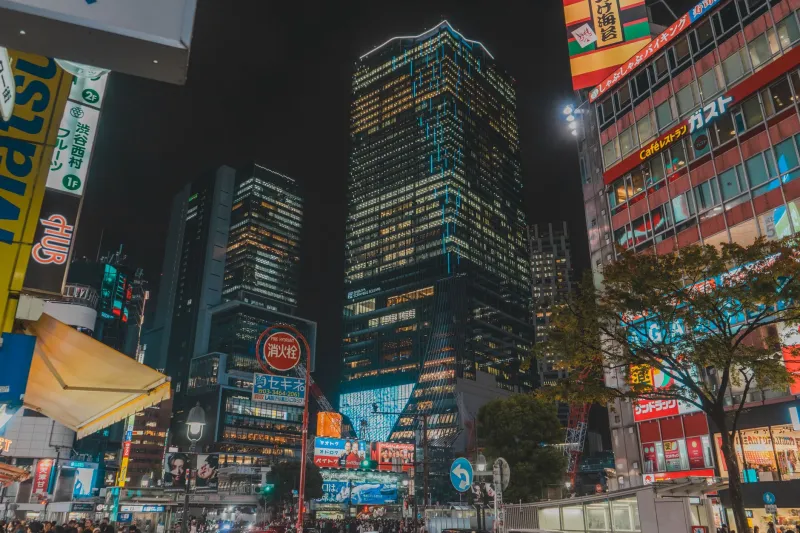
There's a moment every Black expat in Tokyo eventually hits. You're standing outside a bar in Roppongi, and the bouncer waves you in before the group of Japanese salarymen behind you even gets acknowledged. Or you're on the Yamanote Line and every seat next to you stays empty while the car fills up. Sometimes both things happen on the same night.
Welcome to the game. Nobody handed you a rulebook because nobody wrote one for you.
The Gaijin Pass Is Real — And It's Complicated
Let's not pretend the foreigner card doesn't exist. It does. In Tokyo, being a gaijin — a non-Japanese person — comes with a specific kind of social buffer. You're not expected to know the unspoken rules, so when you break them, people shrug. You get a pass on things that would cost a Japanese person social capital. Speak broken Japanese with a smile and you'll get applause. Wear your locs into a business meeting and people chalk it up to "Western culture." The bar is different, and sometimes that difference works in your favor.
Darius, a 34-year-old musician from Atlanta who's been based in Tokyo for six years, describes it plainly. "There are days when being foreign is genuinely protective," he says. "I walk into rooms that I know, back home, I wouldn't even get buzzed into. The gaijin thing buys me a kind of neutrality I've never had in the States."
But Darius is also quick to add the footnote. "That neutrality has a ceiling. And the ceiling is low."
Where the Pass Expires
The gaijin buffer doesn't cover everything. It doesn't cover the landlord who smiles at your Japanese coworker and suddenly has no English when you show up to view the same apartment. It doesn't cover the taxi that slows down, clocks your face, and keeps moving. It doesn't cover the way certain spaces in this city — hostess bars, some high-end restaurants, private clubs — quietly operate a door policy that has nothing to do with whether you speak Japanese.
Monique, a 29-year-old educator originally from Houston who's lived in Tokyo for four years, says the discrimination she encounters doesn't always look like what she grew up recognizing. "In the States, racism has a specific texture. You know what it feels like. Here, it's softer in some ways and sharper in others. Someone won't refuse you to your face. They'll just make the process difficult enough that you give up."
She pauses. "And then you're left wondering — was that about being Black, or being foreign, or both? You can't always separate the threads."
Hypervisibility in a Homogeneous City
Tokyo is one of the most densely populated cities on earth, and it is also one of the most ethnically homogeneous major cities in the developed world. That combination creates a specific kind of visibility that Black expats describe as exhausting in a way that's hard to explain to people who haven't lived it.
In New York or London, you can disappear. In Tokyo, disappearing is not an option. Heads turn. Children stare. Strangers touch your hair on the train — not always maliciously, but without asking, which is its own kind of statement about whose body is considered public property.
"I'm never not aware of how I look in this city," says Marcus, a 38-year-old graphic designer from Chicago who's been in Tokyo for nearly a decade. "In America, I'm hypervisible because of racism. Here, I'm hypervisible because I'm a curiosity. It comes from different places but it lands in the same spot — on my body, on my energy. It's tiring either way."
What makes the Tokyo version distinct, Marcus explains, is the absence of malice in a lot of it. "People aren't always trying to harm you. They're fascinated. But fascination without respect is still objectification. That part doesn't change no matter what country you're in."
Code-Switching, Tokyo Edition
Back home, code-switching is survival. You learn to modulate your voice, your posture, your vocabulary depending on the room. Black Americans are raised to do this before they even have a name for it.
In Tokyo, that skill gets a completely new dimension. Now you're not just toggling between Black and professional, or Black and approachable — you're also toggling between foreign and local-enough, between gaijin and gaikokujin, between the version of yourself that gets grace for not knowing the customs and the version that's expected to perform competence.
Darius calls it "layered switching." "At home, I'm switching between Black Marcus and Corporate Marcus. Here, I'm doing that AND switching between American Marcus and Tokyo Marcus. It's more switches, more energy, more calculation. You're never fully off."
Monique describes developing what she calls a "reading the room" instinct that's sharper than anything she had in the States. "You learn fast which version of yourself to lead with. Sometimes being American is the asset — people are excited about that. Sometimes being Black is the conversation starter that gets you in the room. Sometimes you need to be quiet and professional and let the work speak. You get good at knowing which card to play before you even sit down."
Neither Here Nor There — And That's the Point
What emerges from these conversations is something that doesn't map cleanly onto the Black experience in America or Europe. In the US, Blackness is the primary lens through which you're seen. In many European cities, the immigrant experience dominates the narrative. In Tokyo, you're something else entirely — a foreigner first, a Black person second, an American third, and all of those identities simultaneously, depending on who's looking.
That in-between space is disorienting. It can also be, in specific moments, liberating.
"I'm not carrying the full weight of American racial history in every room here," Marcus admits. "Japanese people don't have the same loaded relationship with Blackness that white Americans do. That's real. That's different. Some days that difference gives me room to breathe."
But he's careful not to romanticize it. "Different isn't the same as free. I'm still navigating. I'm still calculating. The game is just played with different cards."
Learning the Rules of a Game That Keeps Changing
The long-term residents we spoke with share one thing in common: none of them claim to have figured it out. The game shifts. A neighborhood that felt welcoming three years ago starts to feel different as gentrification reshapes who belongs. A workplace that seemed progressive turns out to have a ceiling you only discover when you try to move up. The gaijin pass that worked in your twenties starts to feel thinner as you get older and your ambitions get bigger.
What they have figured out is community. The informal networks of Black expats in Tokyo — the group chats, the Sunday dinners, the WhatsApp threads that circulate apartment leads and visa tips and "avoid this landlord" warnings — are the real infrastructure. Not because Tokyo is uniquely hostile, but because navigating ambiguity is easier when you're not doing it alone.
"We share the map," Monique says simply. "Because nobody else is drawing it for us."
And that, maybe, is the most Tokyo thing about the whole experience. The city doesn't hand you anything. You build what you need, you read what you can, and you play the hand you've got — both cards, at the same time, in a game that was never designed to include you.
You play anyway. And sometimes, you win.