Playing the Room: How Black Expats in Tokyo Learn to Work Every Identity They've Got
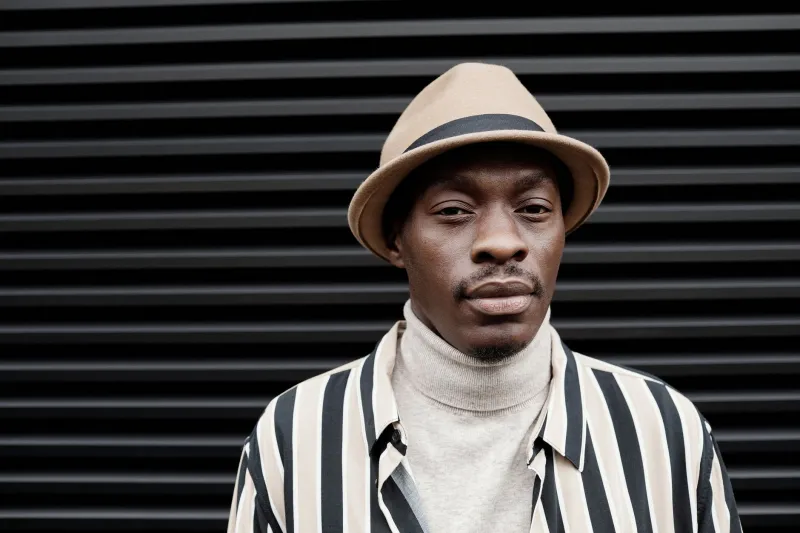
There's a moment every Black expat in Tokyo knows. You walk into a space — a corporate lobby, a members-only bar in Roppongi, a jazz club tucked under the train tracks in Nakameguro — and before you even open your mouth, the room is already making decisions about you. Who you are. Whether you belong. What kind of Black you might be.
And then you open your mouth. And everything shifts.
"The second they hear my American accent, the whole vibe changes," says Marcus, a 34-year-old music producer from Atlanta who's been based in Tokyo for six years. "It's like flipping a switch. Suddenly I'm not just a Black guy — I'm an American Black guy. And in Japan, that distinction carries weight."
That distinction? It's the whole game.
The Deck You're Dealt
Tokyo operates on a layered social logic that most expats eventually figure out — but Black expats have to learn it faster, and with higher stakes. The city has its own taxonomy of foreigners, and where you land in that taxonomy determines everything from whether a landlord calls you back to whether a recruiter takes your resume seriously to whether the bouncer at a Shibuya club waves you in or finds a sudden reason to turn you away.
At the top of the unspoken hierarchy sits the Western expat — ideally white, ideally from an English-speaking country, ideally in finance or tech. Below that, the calculus gets complicated fast. And for Black expats, nationality becomes a kind of currency that can either amplify or undercut your Blackness depending on how it's read.
American Blackness, specifically, carries a cultural cache in Japan that's been built over decades — through hip-hop, through NBA fandom, through the long shadow of U.S. military presence and pop culture exports. Being Black and American in Tokyo isn't the same experience as being Black and British, Black and Nigerian, or Black and Brazilian. Each identity opens different doors. And closes different ones.
"I've watched the same room treat me differently depending on what I lead with," says Danielle, a 29-year-old English teacher from Chicago who moonlights as a DJ in the Shimokitazawa scene. "If I come in as the American? Cool, fun, exotic. If I come in as the Black woman who's been here three years and speaks Japanese? Suddenly people don't know what box to put me in. And that makes them uncomfortable."
Reading the Room, Rewriting the Script
Code-switching isn't a new concept for Black Americans — most of us learned it before we could name it. But Tokyo adds extra layers to that already exhausting performance. Here, you're not just toggling between professional and casual registers. You're navigating between your Blackness, your Americanness, your foreigner status, and whatever the person across from you has decided you represent before you've said a word.
Some Black expats describe developing what they call a "gaijin card" strategy — leaning into their foreignness as a kind of social lubricant when Blackness alone might create friction. Drop the American reference points early. Mention a recognizable cultural touchstone. Let the accent do the work of softening whatever assumptions are already in the air.
"I've absolutely used my American identity as armor," admits Terrence, a 41-year-old entrepreneur from Houston who runs an import business out of Shibuya. "Not because I'm ashamed of being Black — I'm not, not even a little — but because in certain business contexts here, 'American' gets me in the room faster. Once I'm in the room, I can be everything else I am."
That strategy isn't without its costs. There's a particular kind of exhaustion that comes from constantly calculating which version of yourself to foreground. It's a tax on your energy that white expats simply don't pay. And the calculation is never fully reliable — Tokyo's social landscape shifts depending on the neighborhood, the industry, the generation of Japanese person you're dealing with, and a dozen other variables that can flip the script without warning.
When Visibility Becomes a Tool — and a Trap
One of the more counterintuitive lessons Black expats learn in Tokyo is that visibility cuts both ways. In a city where standing out is the default experience for anyone who doesn't look Japanese, Black expats are already visible whether they want to be or not. The question becomes: how do you leverage that visibility without letting it define and confine you?
In creative industries — music, fashion, art, entertainment — Blackness can function as a kind of cultural authority. The global dominance of Black American aesthetics means that in certain Tokyo circles, being Black and American is practically a credential. Producers, stylists, and creatives describe being sought out specifically because of their Blackness, their perceived proximity to the source of whatever's culturally relevant.
But that same exoticization can curdle fast. "There's a version of being wanted that still doesn't see you as a full person," says Danielle. "Like, they want what Blackness represents to them — the cool, the culture, the aesthetic — but they're not necessarily interested in you as a human being with a whole life and a perspective and opinions that might challenge them."
The trap of strategic visibility is that it can lock you into performing a version of yourself that serves other people's narratives. And in a city where social belonging is hard-won for any foreigner, the temptation to play the role that gets you accepted is real and constant.
Building Your Own Table
What's emerged in response to all of this maneuvering is something genuinely powerful: a Black expat community in Tokyo that's learned to build its own spaces, its own networks, its own definitions of belonging that don't require anyone else's permission or validation.
From informal dinner circles to creative collectives to professional networks that operate largely off the radar of mainstream expat culture, Black people in Tokyo are constructing a social infrastructure that works on their own terms. A space where you don't have to lead with your passport or your accent or your proximity to some cultural touchstone. Where you can just be.
"The community I've found here — that's the real thing," says Marcus. "Everything else is just the game you play to get through the day. But the people who actually see you? That's what makes Tokyo home."
The gaijin card game is real, and it's exhausting, and nobody should have to play it. But until the rules change — and they're changing, slowly, on the margins — Black expats in Tokyo are out here mastering it, working every identity they've got, and building something beautiful in the spaces between.