The Homesick Feeling That Hits When You're Already Home: Black Expats Returning from Tokyo
Nobody warned Janelle about the grocery store.
She'd been back in Atlanta for three weeks after two and a half years in Tokyo when she walked into a Kroger and had what she can only describe as a minor breakdown in the cereal aisle. Not because of anything dramatic. Just the noise. The sheer volume of people talking at full register, carts bumping, kids running, somebody's phone on speaker. The chaos of American public space that she'd grown up inside of and somehow, in her time away, completely forgotten how to inhabit.
"I stood there for like five minutes just trying to recalibrate," she says. "And then I thought—I've been in Japan too long. And then I thought—no, I've changed. Those are different things."
That distinction is at the center of what happens to Black expats when they come home from Tokyo. It's not just reverse culture shock in the textbook sense. It's something more specific and, for many people, more disorienting: the experience of returning to a place that's supposed to know you, only to discover that you've become someone it doesn't quite recognize.
The Adjustment Nobody Talks About
The expat-to-Tokyo pipeline has a robust mythology around the initial move. The language barrier, the isolation, the learning curve of navigating a city that rewards patience and punishes assumptions. There are blogs, subreddits, entire communities built around that transition.
The return trip gets almost no attention.
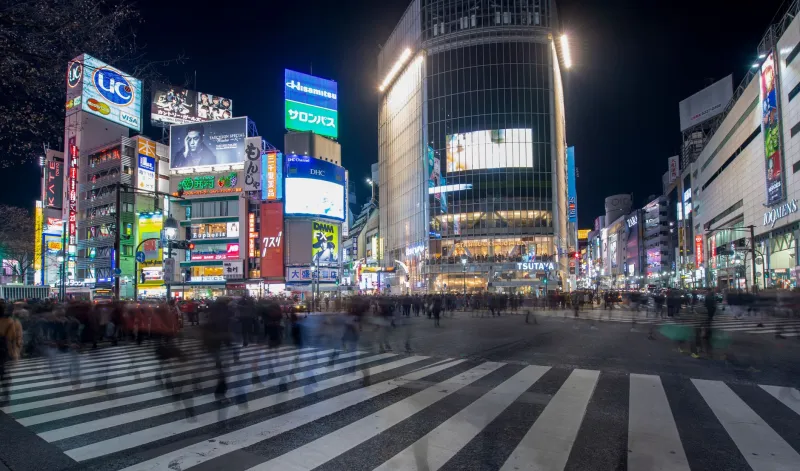
"Everyone asks how Tokyo was," says Darnell, a graphic designer who spent three years in Shibuya before moving back to Philadelphia last year. "Nobody asks how coming back is. And coming back was genuinely the harder thing."
For Black expats specifically, the return carries layers that white counterparts often don't have to process. Tokyo, for all its complications, offers a particular kind of freedom from the American racial context. The surveillance, the hypervisibility, the constant low-grade threat assessment that Black Americans navigate at home—in Tokyo, that specific weight lifts. Not because racism doesn't exist in Japan (it absolutely does), but because it operates through a different set of codes, and the particular American version of anti-Blackness is not omnipresent in the same way.
Coming home means picking that weight back up. And after years without it, it can feel crushing in a way it never quite did before.
Your Body Remembers What Your Mind Forgot
"The first time I got followed in a store back in the States, I almost laughed," says Keisha, who returned to Houston after four years in Tokyo. "Not because it was funny. Because I had genuinely forgotten that that was a thing that happened to me. My body had to relearn how to brace for it."
This is one of the most commonly reported experiences among returning Black expats: the reactivation of survival mechanisms that had gone dormant. The hyperawareness in certain spaces. The calculation of how you're being perceived. The reading of every room for threat level before you relax into it.
In Tokyo, that calculus exists too—but it's calibrated differently. The stares are more likely to be curiosity than hostility. The assumptions being made about you are different ones. You develop new skills, new readings, new ways of moving. And then you come back and have to run two operating systems simultaneously: the one you grew up with and the one you built abroad.
"I kept catching myself bowing," says Marcus, who returned to Chicago after five years in Tokyo. "Like, reflexively. At the grocery store, at the bank. People looked at me like I had lost my mind. And I had to explain to myself that I was home now. The rules changed again."
The Community Question
One of the subtler losses that returning expats describe is the particular kind of Black community they'd built in Tokyo. Diaspora bonds forged under shared conditions of outsider status tend to run deep. The people you found in Tokyo—fellow Black expats navigating the same city with the same set of complications—become a specific kind of family.
Coming home means leaving that community behind, and the Black community waiting at home, as beloved as it is, doesn't fill the same shape.
"My people at home are my people," says Aisha, who returned to Chicago after three years in Osaka and Tokyo. "But they don't have the reference points. When I talk about certain experiences from Japan, there's a translation gap. And when I try to talk about how coming home feels, there's another translation gap. I love them. But I feel alone in a way I didn't expect."
Some returning expats describe finding their footing through online communities—groups of people who've made the same journey and can speak the same language. Others find themselves drawn back to Japan, or planning the next move somewhere else entirely. The experience of having lived abroad changes your relationship to the concept of home in ways that don't reverse when you reboard the plane.
Carrying Tokyo Back
It's not all grief. Most returning expats also describe what they brought back as genuinely useful—a recalibrated patience, a different relationship to silence and space, a clearer sense of their own identity forged partly in contrast to everything Tokyo asked them to be.
"I know myself better," says Janelle. "I know what I actually need versus what I was told I needed. I know how to be alone without being lonely. Tokyo taught me that."
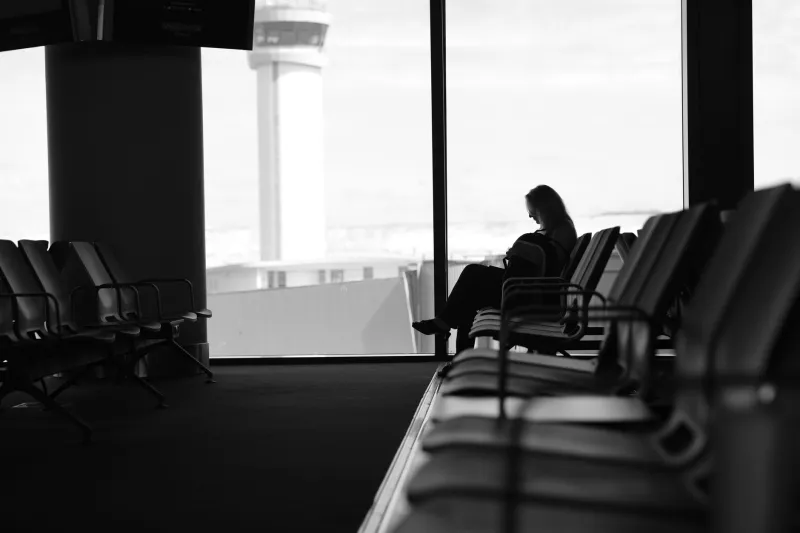
That clarity, earned through the particular difficulty of building a life in a foreign city, doesn't disappear when the flight lands at Hartsfield-Jackson. It travels with you. The challenge is figuring out where it fits in the life you're rebuilding.
The answer, most people eventually find, is that it fits everywhere. You just have to be patient enough with yourself to let it settle. Tokyo taught you that too.