You Can Go Home Again — But Tokyo Will Follow You: The Grief Nobody Warns You About
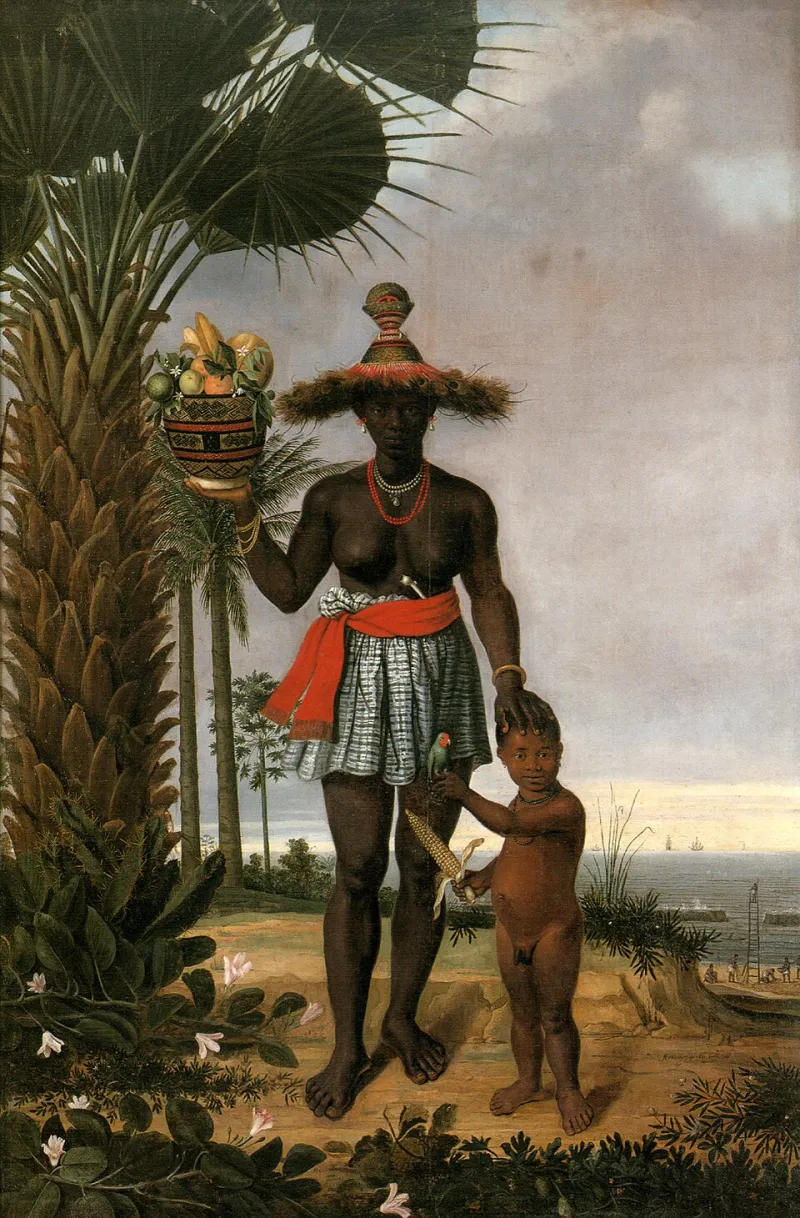
Photo: Albert Eckhout, Public domain, via Wikimedia Commons
The first few weeks back in the States, everything feels slightly wrong in a way you can't quite place.
The sidewalks are too wide. People are too loud in restaurants — not in a bad way, just differently loud, in a way that used to feel normal and now feels like a lot. The grocery store overwhelms you with choices you used to want. Someone bumps into you and doesn't apologize, and you feel it in your body before you can think it through.
You're home. You know you're home. And something is grieving.
This is reverse culture shock, and for Black Americans returning from extended time in Tokyo, it hits in ways that are specific, layered, and almost completely absent from the conversation about expat life.
The Paradox Nobody Wants to Explain
Here's the thing that's hard to say out loud without sounding like you're romanticizing someone else's country: a lot of Black Americans feel freer in Tokyo than they do at home.
Not free from racism — that's a different and more complicated conversation, and nobody with sense is claiming Tokyo is a post-racial paradise. The microaggressions are real. The othering is real. The exhaustion of being visibly foreign in a largely homogeneous city is real.
But there's a particular kind of weight that Black Americans carry in the United States — the hypervigilance, the threat assessment, the constant low-grade awareness of how you might be perceived in any given space — that, for many, gets lighter in Tokyo. Not gone. Lighter.
And when you come home and that weight settles back on your shoulders, you feel the difference in your bones.
Dre, a 33-year-old from Baltimore who spent three years in Tokyo before returning to the U.S. last year, describes it as "the armor coming back on." He says, "In Tokyo, I was still navigating stuff. But it was different stuff. The stuff here — the thing where you're in a store and you feel someone watching you, the thing where you have to think about how you sound before you speak in a professional setting — I had forgotten how much of my energy that takes. Tokyo reminded me by taking it away for a while."
Coming home means remembering.
The Specific Things You Lose
Ask any Black American who's lived in Tokyo what they miss, and you'll get answers that don't fit the standard expat nostalgia script.
Yes, the food. Yes, the trains. Yes, the sense of safety walking home at 2 AM. But dig deeper and you get something else.
You miss the version of yourself that existed there. The one who moved through the world without the full load of American racial history pressing down on every interaction. The one who was an individual in a way that's harder to maintain in a country that has very specific ideas about what you represent.
You miss the community you built — and you understand now, only in retrospect, how rare and deliberate that community was. You didn't stumble into those friendships. You and a group of other Black expats chose each other in a city that could have left you isolated. That chosen family structure doesn't automatically transfer.
You miss the texture of daily life in ways that embarrass you slightly. The specific sound of a Tokyo morning. The choreography of rush hour on the Yamanote Line. The way convenience stores feel like a small mercy at midnight.
Simone, a 29-year-old graphic designer from Atlanta who returned after two and a half years, talks about missing "the anonymity that wasn't really anonymity." She explains: "In Tokyo, people looked at me because I was foreign. In Atlanta, people look at me because of a whole history. It's not the same look. It doesn't feel the same in your body."
The Identity Hangover
Here's what really doesn't get discussed: coming back from Tokyo can trigger a genuine identity crisis.
You spent years building a life in a context where your Blackness was one of several things that defined you — your foreignness, your profession, your personality, your style. You had space to be complex in a way that American racial dynamics don't always permit. You were interesting rather than threatening or stereotyped or representative of a demographic.
And then you come home, and the old categories reassert themselves, and you realize you don't fit in them the way you used to. Not because you've changed your politics or your identity, but because you've been somewhere that showed you a different set of possibilities for how you move through the world.
That dissonance is real. It's also, for a lot of people, the thing that finally pushes them to be intentional about how they live in the U.S. — what they accept, what they push back on, what they refuse to normalize again.
The Grief That Doesn't Have Language
The hard part about reverse culture shock for Black Tokyo expats is that the grief is difficult to articulate in community.
You can't say "I miss Tokyo" to your family without getting a look that suggests they think you've lost perspective. You can't explain the weight that returned without it sounding like you're saying America is worse than Japan — a comparison that immediately invites debate and misses the point entirely.
The people who understand are, largely, other Black Americans who've done the same thing. Which is why the expat community — the group chats, the Discord servers, the Instagram comment sections — stays active long after people leave Tokyo. The city creates a shared language, and the people who speak it find each other across time zones.
"I have a group chat with six people who all lived in Tokyo at different times," says Marcus, a 37-year-old from Oakland who returned three years ago and still hasn't fully stopped grieving the city. "We don't talk about Tokyo every day. But when something happens — when one of us has a particularly bad week back home, when the weight is heavy — we know what we're talking about without having to explain it."
The Thing About Going Back
A significant number of Black Americans who leave Tokyo go back. Not always permanently, but they go back. For visits that stretch. For jobs that appear at convenient moments. For reasons they couldn't fully articulate if you asked them.
Tokyo has a way of claiming people. Not everyone — plenty of expats leave and feel only relief, only gratitude for what they learned and readiness to move forward. But for some, the city becomes a part of their interior landscape in a way that doesn't resolve cleanly.
The grief is real. The loss is real. And it doesn't require you to pretend that Tokyo was perfect or that America has nothing to offer or that the complexity of your experience as a Black person in Japan was simple.
It just requires you to let yourself feel what you actually feel.
You were somewhere. It changed you. You left. And some part of you is still there, walking those streets, lighter than you knew you could be.
That's not nothing. That's worth grieving.